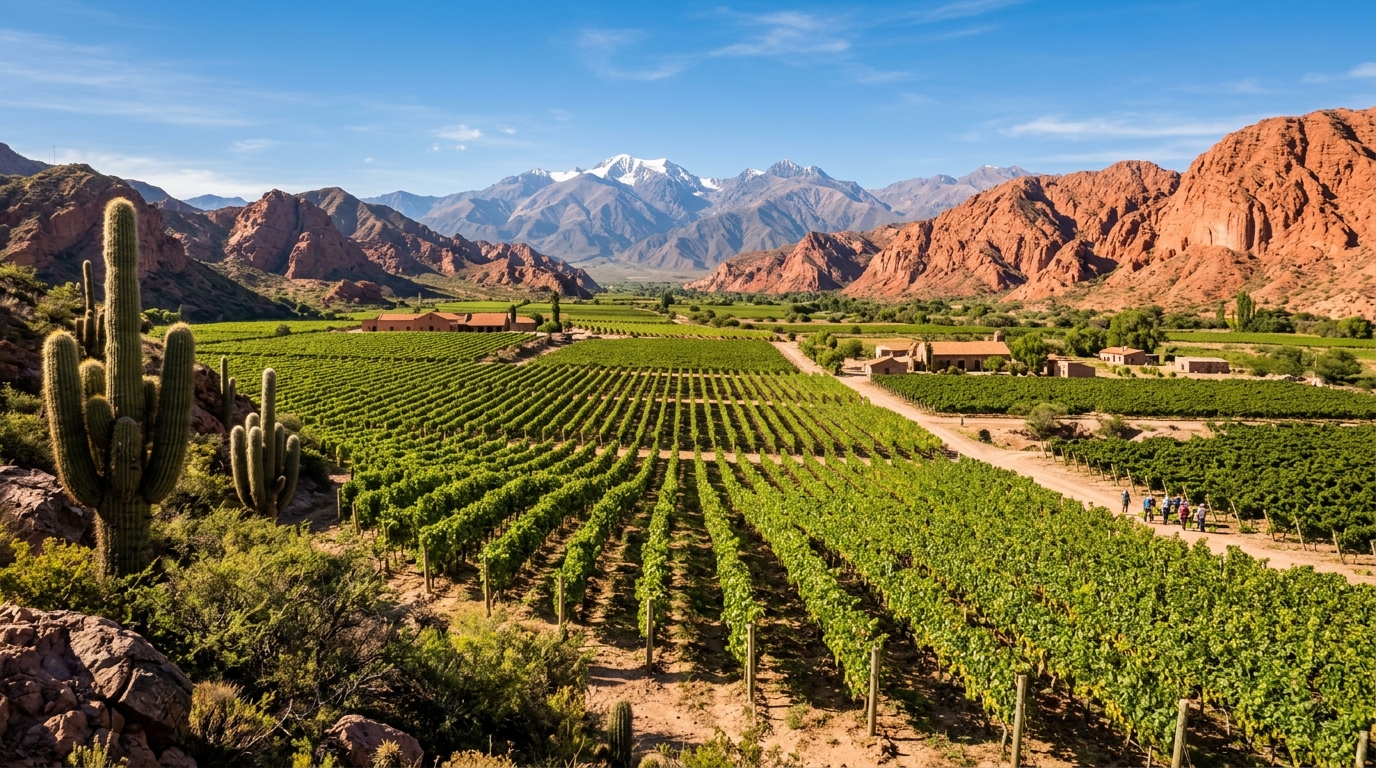
Salta & the Calchaquí Valley: Where Vines Touch the Sky
A field guide to Argentina's high north — where grapes ripen above 1,700 metres, a white wine smells of jasmine, and the oldest working winery in the country sits at the edge of the clouds.
Most people meet Argentine wine in Mendoza. Salta is what happens when you keep driving — north, and up. The road from Salta city to Cafayate climbs through the Quebrada de las Conchas, a gorge of wind-carved red rock that looks less like wine country than the surface of Mars. Then the canyon opens, the vines appear, and you realise you are standing higher than almost any vineyard on Earth.
This is the Calchaquí Valley: a chain of high desert valleys running roughly 270 kilometres down the spine of the Andes, shared between the provinces of Salta, Catamarca and Tucumán. It holds only a small share of Argentina's vineyards, but a wildly outsized share of its reputation — and almost all of its drama.
What's inside
01The highest vineyards
Altitude is the whole story here.
Read Step 1 →Cafayate
Cafayate is the heart of Salta wine: a relaxed adobe town on a leafy plaza, ringed by some of the highest vineyards on Earth.
Read Step 2 →Torrontés country
If Mendoza belongs to Malbec, Salta belongs to Torrontés.
Read Step 3 →Visiting Salta
Malbec, but not as you know it — plus intense Torrontés. Salta is dramatic, remote and unlike anywhere else in wine.
Read Step 4 →Quick answers
Why is Salta wine grown so high?
The Calchaquí Valleys lie in the high Andean north, where the flat, watered land suitable for vines happens to sit well above 1,700 metres. Far from a problem, the altitude — intense sun, cool nights, dry air — is exactly what gives the wines their colour, freshness and aromatic power.
What wine is Salta famous for?
Torrontés, Argentina's signature aromatic white, which reaches its peak around Cafayate. Salta also makes distinctive high-altitude Malbec and Cabernet Sauvignon.
Is Torrontés a sweet wine?
No — and that's the classic surprise. It smells intensely floral, almost sweet, then lands dry, fresh and faintly bitter on the finish. That very contrast is what makes it shine at the table — try it well chilled with empanadas salteñas or a slice of goat cheese.
Where is the highest vineyard in the world?
One of the very highest is Bodega Colomé's “Altura Máxima” in Salta, planted at 3,111 metres above sea level.
Is Salta or Mendoza better for a wine trip?
Different, not better. Mendoza is bigger, easier and more polished; Salta is higher, wilder and more scenic. If you can, visit both.